Managing a large, distributed fleet of connected devices is an inherently real-time problem. Devices are constantly reporting their status, usage, and health - producing a steady stream of signals that are only valuable if they can be understood as they arrive.
The opportunity was not simply to collect more data, but to make that data immediately useful. By bringing live telemetry, historical context, and regional patterns into a single system, operators could move from reactive monitoring to informed decision-making.
That shift required an architecture designed for intent, scale, and clarity.
Designing for high-frequency telemetry at scale
The system needed to ingest frequent device pings without bottlenecks or data loss, while remaining flexible enough to support different message types as the fleet evolved.
Each device publishes telemetry through an MQTT broker, producing a steady stream of data that must be validated, routed, and persisted with minimal latency. The architecture had to scale horizontally and degrade gracefully under load.
Routing intent, not just messages
Not all telemetry is created equal. Different message types carry different intent - health checks, usage data, battery status, and system signals.
We designed a topic-based routing strategy in AWS, directing incoming messages to specialized serverless functions based on payload and purpose. This allowed each workflow to remain focused, simple, and independently scalable.
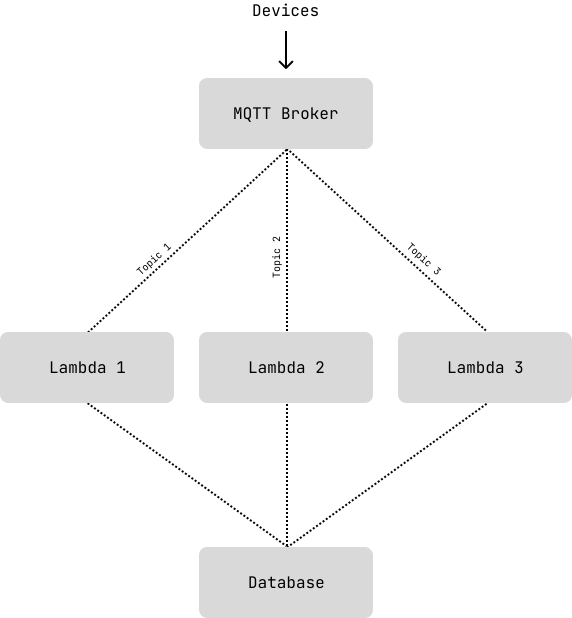
Incoming messages are transformed and persisted through dedicated processing functions, creating a clean boundary between ingestion and application logic. This separation enables reliable storage, historical analysis, and downstream aggregation without coupling the frontend to raw event streams.
Exposing a stable interface for evolving data
To support a fast-moving frontend without locking in backend assumptions, we built a dedicated API layer.
An Express-based API provides a consistent, secure interface between the data layer and the user interface, allowing both to evolve independently as new metrics, views, and devices are introduced.
Building clarity on top of live systems
The frontend was designed to prioritize situational awareness.
Using Next.js, we built a responsive interface that allows users to:
- View fleet status in real time
- Inspect individual devices for battery health and usage history
- Identify regional patterns and anomalies
- Track trends over time without sacrificing live responsiveness
The goal was not just visibility, but confidence.
Turning telemetry into operational insight
By combining real-time data with historical context, the platform enables proactive decision-making rather than reactive monitoring.
Operators can identify emerging issues before devices fail, optimize deployment based on regional usage, and understand how the fleet behaves over time — all from a single interface.
This project reflects our belief that real-time systems should reduce cognitive load, not increase it. When telemetry is thoughtfully routed, interpreted, and presented, it becomes a strategic asset rather than background noise.